A home's main entrance is both its first line of defense against intrusion and its architectural signature. In this guide, we break down what truly defines a certified armored security door in Rethymno and Crete, how gear-driven catapult locks work, and why marine-grade aluminum cladding is essential for Mediterranean properties.
1. Understanding EN 1627 RC3 & RC4 Security Classifications
- Class RC3 (The Residential Gold Standard): Features double electro-galvanized steel armor plates, internal omega steel ribs, fixed hinge-side dog bolts, and withstands experienced attackers using heavy 70cm crowbars and mechanical tools.
- Class RC4 (Maximum Villa & Commercial Protection): Adds manganese steel plates over the lock assembly to resist axes, heavy hammers, and cordless power drills.
Key Takeaway
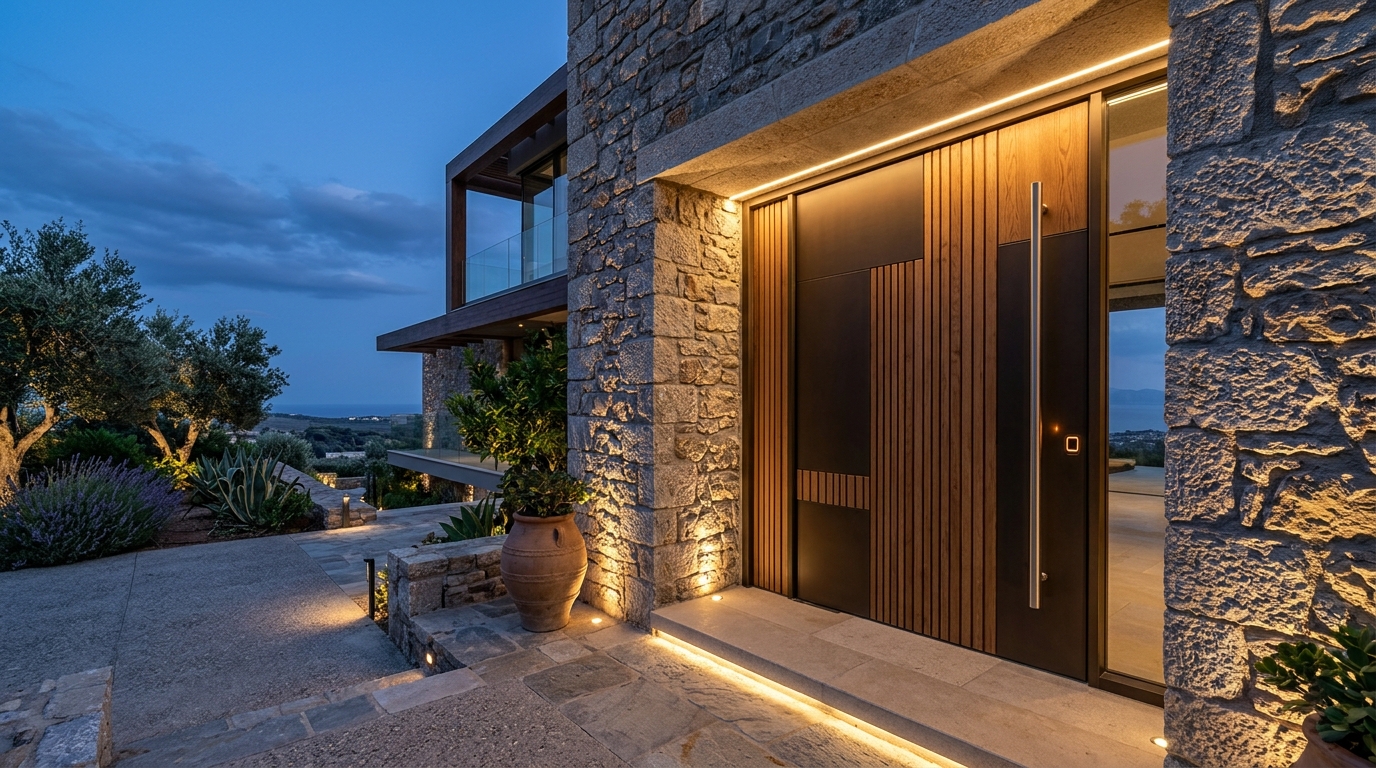
A true security door in Crete must combine 3 elements: certified RC3/RC4 double-steel armor, a gear-driven catapult lock with a manganese steel Defender shield, and marine-grade aluminum exterior cladding (never MDF) to prevent coastal rot and peeling.
2. The Core Defense: Gear Catapult Locks, Manganese Defender & Anti-Snap Cylinders
Legacy double-bitted keys can be picked silently. Our doors integrate a triple defense: gear-driven catapult locks that permanently freeze all 14–20 perimeter bolts if cylinder extraction is attempted, a hardened manganese steel Defender shield preventing drilling, and high-security anti-bump/anti-snap cylinders with restricted key ownership cards.
3. Steel Armored Doors vs. Alumil SMARTIA MD67 / Pivot Entrance Doors
4. Why Exterior Doors in Crete Must Never Use MDF Cladding
MDF wood-veneer panels blister and rot within 2–3 years of exposure to Crete's UV sun and coastal humidity. We exclusively install Qualicoat Seaside Class electrostatic aluminum panels (including realistic wood-grain Sublimation finishes) that require zero maintenance.